Commercial kitchen cleaning in Tulsa, Oklahoma
Commercial Kitchen Cleaning Services
Detailed cleaning for restaurant equipment, cooking lines, floors, walls, and hard-to-reach areas, planned around your operating schedule.
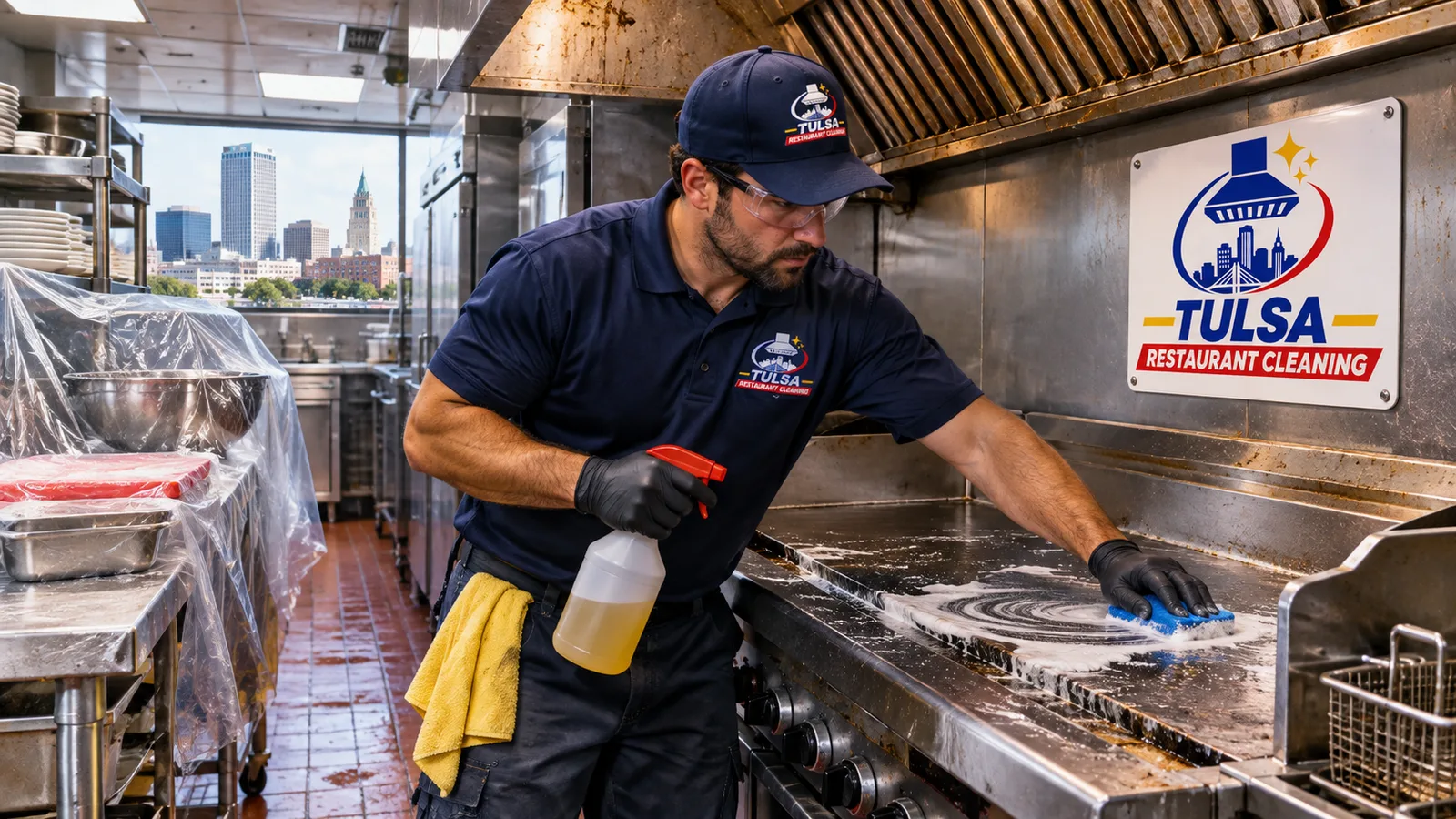
Professional cleaning built around your equipment, layout, operating hours, and highest-priority problem areas.
Commercial Kitchen Cleaning Services address the grease, carbon, food residue, and soil that routine closing duties may leave behind. Tulsa Restaurant Cleaning develops the scope around your equipment, layout, operating hours, and problem areas. The goal is a thoroughly cleaned workspace that is easier for your staff to maintain after service.
Our work can cover recurring Kitchen Cleaning Services, focused equipment care, or a full Commercial Kitchen Deep Cleaning. As an experienced restaurant team in Tulsa, we understand that prep schedules, cooling periods, shift changes, and reopening deadlines affect how the work must be planned. We confirm access, priorities, exclusions, and timing before cleaning starts.
Tulsa has distinct restaurant settings. Downtown kitchens may have tight loading access and compact cook lines. Brookside dining rooms often need careful scheduling around evening traffic. Cherry Street restaurants may operate in older commercial spaces with narrow work areas, while the Blue Dome District has late-night venues that need work timed around extended hours. Those practical details shape staffing, equipment movement, and the order of work.
What Restaurant Kitchen Cleaning Can Include
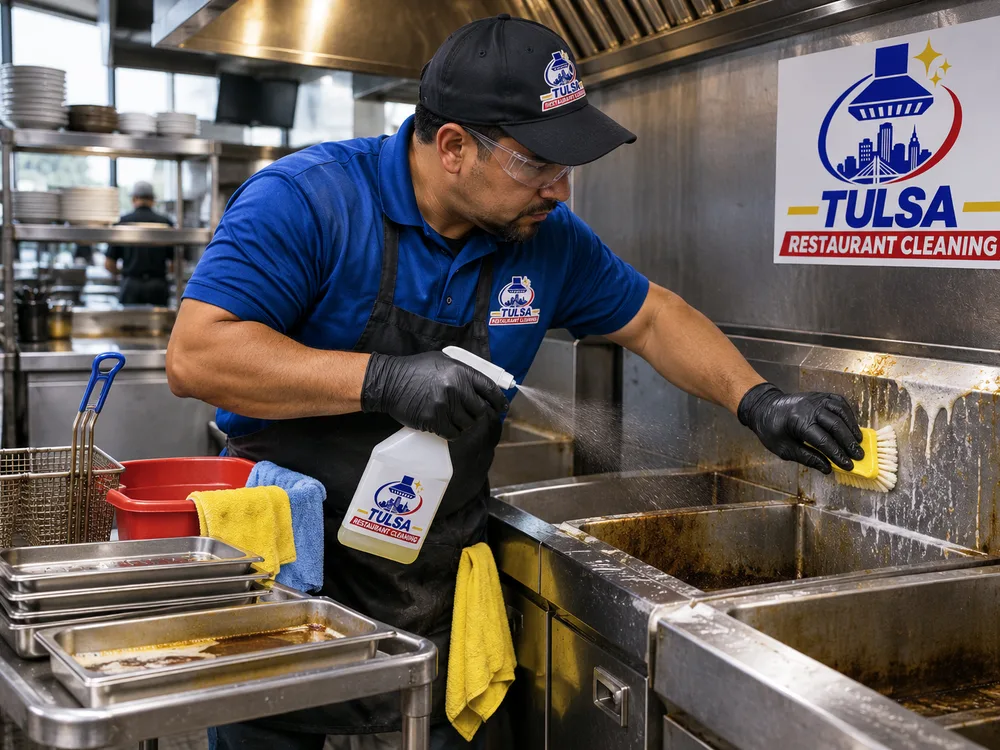
A complete scope begins with the actual soil load and surfaces in the kitchen. Cooking lines commonly need degreasing around ranges, fryers, flat-top griddles, ovens, salamanders, and stainless-steel work areas. Kitchen Equipment Cleaning may also cover removable components such as racks, drip trays, grease cups, knobs, and guards when they can be handled safely under manufacturer guidance.
Other common areas include walls, washable ceilings, baseboards, shelving, exterior refrigeration surfaces, sinks, floor edges, casters, and the spaces beneath or behind movable equipment. Floors may require scraping, degreasing, agitation, and wet extraction rather than a quick mop. Cleaning chemicals need suitable dwell time, and food-contact surfaces require the correct rinse or sanitizing procedure for the product being used.
Every item is not treated the same way. Aluminum, painted surfaces, electrical controls, natural stone, rubber seals, and stainless steel can react differently to heat, moisture, alkalinity, or abrasion. Professional Kitchen Cleaning uses surface-appropriate products and methods instead of applying one aggressive degreaser throughout the room.
Detailed kitchen care
Commercial Kitchen Deep Cleaning by Area
Cooking Line
Degreasing and detailing may cover equipment exteriors, control surrounds, splash areas, removable parts, legs, casters, and accessible spaces between appliances.
Floors and Edges
Built-up soil is loosened around floor-wall joints, equipment feet, corners, thresholds, and other areas that standard mopping may miss.
Prep and Storage Areas
Washable shelving, worktables, sinks, baseboards, wall surfaces, and accessible storage areas can be included after food and loose supplies are removed or protected.
Equipment Exteriors
Refrigerators, freezers, ovens, dish equipment, and stainless panels receive surface-appropriate care, subject to safe access and manufacturer restrictions.
Hard-to-Reach Spaces
Cleaning behind and beneath movable equipment targets grease and food debris that accumulate outside the normal reach of a closing crew.
Focused Problem Areas
A Kitchen Cleaning Company can prioritize a greasy cook line, neglected floor perimeter, reopening cleanup, or another defined area without overselling unnecessary work.
How service works
How Our Commercial Kitchen Cleaning Tulsa Process Works
-
Step01
Walk Through the Kitchen
We identify equipment, surface materials, grease levels, access limits, water and drainage considerations, and the hours available for cleaning. Photos or an on-site review may help define the job.
-
Step02
Set a Written Scope
The plan states which areas and equipment are included, whether movable items need repositioning, what the kitchen staff should remove, and when the space needs to be ready.
-
Step03
Prepare and Protect
Food, utensils, disposables, and sensitive items must be removed or covered. Equipment is cooled and shut down when required, while controls and electrical components are protected from inappropriate moisture.
-
Step04
Degrease and Detail
The crew applies suitable products, allows the required dwell time, agitates built-up residue, and cleans accessible components and surrounding surfaces in a controlled sequence.
-
Step05
Rinse, Recover, and Review
Residue and wastewater are managed according to the method and work area. The completed scope is checked so questions can be addressed before the kitchen returns to normal use.
Why Hire Restaurant Kitchen Cleaners in Tulsa?
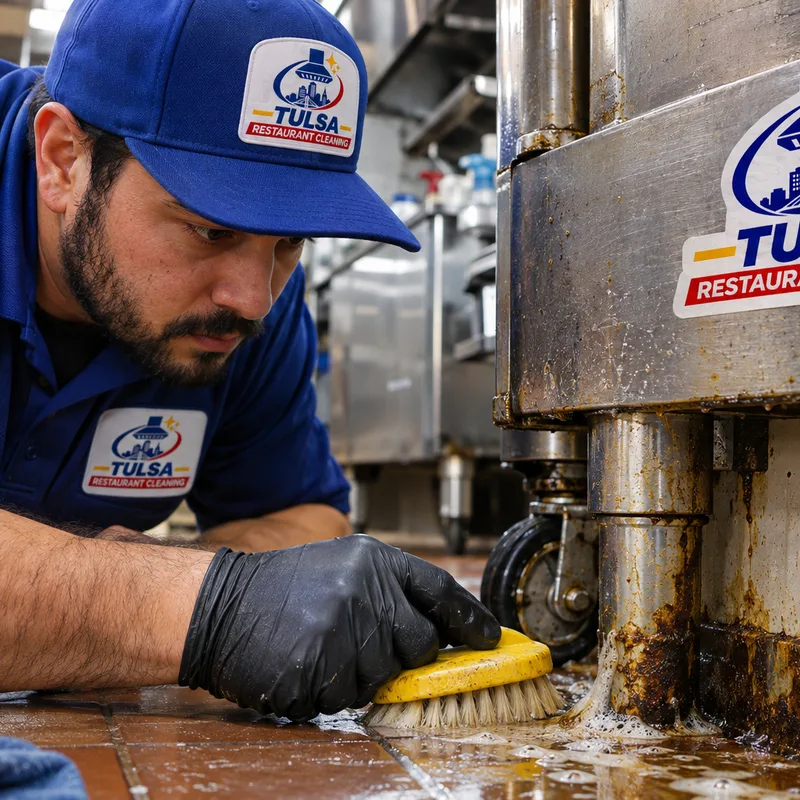
Routine staff cleaning and periodic deep cleaning have different purposes. A closing crew needs to reset the kitchen for the next shift. A deep-cleaning crew has more time, tools, and access to address residue beneath equipment, along floor edges, around casters, and across large washable surfaces.
Tulsa's hot summers can increase the practical pressure on kitchens, refrigeration equipment, and staff working near active cook lines. Scheduling heavy cleaning after shutdown gives equipment time to cool and keeps intensive work out of active food production. Downtown access, late operating hours in entertainment districts, and limited staging space can also affect crew arrival and setup.
Tulsa Restaurant Cleaning plans around those conditions. We discuss whether equipment can be moved, who is responsible for disconnecting utilities, which surfaces need special handling, and how much drying or reset time is available. We do not represent general kitchen cleaning as a substitute for fire-suppression inspection, exhaust-system service, pest control, equipment repair, or required health inspections. Those jobs require their own qualified providers.
How Much Does Commercial Kitchen Cleaning Cost in Tulsa?
Commercial kitchen cleaning in Tulsa typically ranges from about $500 to $2,500 for a scheduled deep clean, while large kitchens, severe buildup, or extensive equipment detailing may cost more. A focused cooking-line or floor service can fall below a full-kitchen project.
Final pricing depends on kitchen size, soil level, equipment count, access, required labor hours, surface sensitivity, and whether appliances can be moved safely. Overnight scheduling or short turnaround times may also affect the quote. The exact cost is confirmed after the kitchen and requested scope are reviewed.
Before service begins
Preparing for Kitchen Equipment Cleaning
Good preparation protects inventory and gives cleaners access to the areas included in the scope. Remove exposed food, utensils, small appliances, paper goods, and loose containers from the work zone. Empty designated shelves or equipment only when the cleaning plan calls for it. Staff should identify appliances that cannot be moved or exposed to moisture.
Cooking equipment needs enough time to cool before work begins. Gas, electrical, water, and refrigeration connections should be handled only by authorized people when disconnection is necessary. The cleaning crew should also know about damaged cords, loose tiles, active leaks, delicate labels, and equipment with manufacturer-specific restrictions.
Commercial kitchen cleaning does not replace daily warewashing, food-contact sanitizing, spill response, or employee closing routines. It supports those tasks by tackling periodic buildup and access-intensive areas. Recurring frequency depends on cooking volume, menu, fryer use, layout, staffing, and how quickly grease returns. A busy fry line may need focused service more often than a low-grease prep kitchen.
Share your kitchen layout, operating hours, and priority areas to receive a practical scope with the timing and preparation requirements clearly stated.
Common questions
Commercial Kitchen Cleaning Questions
How long does Restaurant Kitchen Cleaning take?+
A focused service may take several hours, while a full deep clean often requires an overnight work window or longer. Kitchen size, equipment density, grease buildup, access, and the number of cleaners determine the schedule. Compact cook lines in Downtown Tulsa can take extra setup time when staging and loading access are limited.
Can cleaning be scheduled after our restaurant closes?+
Yes, after-hours scheduling is often the most practical choice because equipment can cool and food production has stopped. The available window must include preparation, cleaning, recovery, drying, and staff reset time. Restaurants in the Blue Dome District with late operating hours may need a start time coordinated around final service.
Do you move fryers, ranges, and refrigerators?+
Movable equipment can be repositioned when it is safe, authorized, and included in the scope. The crew should not disconnect hard-wired, plumbed, gas-fed, or fixed equipment unless that work has been assigned to a qualified person. Casters, utility connections, floor condition, and available clearance are checked before an appliance is moved.
Does Professional Kitchen Cleaning include exhaust hoods and ducts?+
General kitchen cleaning should not be assumed to include the complete exhaust path. Hood interiors, fans, ducts, rooftop components, and fire-suppression equipment may require a separate qualified exhaust or suppression provider. The written scope should state whether visible hood surfaces or removable filters are included.
How often should a commercial kitchen be deep cleaned?+
The right interval depends on cooking volume, grease production, menu, equipment layout, and daily cleaning performance. High-use fryers and griddles can create buildup faster than light prep operations. A practical schedule can combine recurring floor or cook-line attention with broader periodic cleaning based on what is found during each Tulsa service.
Can you clean while food and supplies remain in the kitchen?+
Food and supplies may remain only when they can be removed from the active work zone and protected appropriately. Exposed food, utensils, packaging, and smallwares should not sit near degreasing, rinsing, or agitation. The preparation plan identifies what your staff must relocate before the crew arrives.
What information is needed for an accurate cleaning quote?+
An accurate quote needs the approximate kitchen size, equipment list, current condition, requested areas, access details, operating hours, and desired completion window. Photos can help with an initial review, but heavy buildup or complicated equipment placement may require an on-site assessment at the Tulsa property.
Plan a Cleaner Commercial Kitchen
Tell Tulsa Restaurant Cleaning what needs attention and when your kitchen is available. We will help define the work, preparation steps, and realistic service window before cleaning begins.