Commercial kitchen floor cleaning in Tulsa, Oklahoma
Commercial Kitchen Floor Cleaning
Professional degreasing for restaurant tile, grout and hard floors, scheduled around your operating hours.
Cleaner Floors for a Safer, More Presentable Kitchen
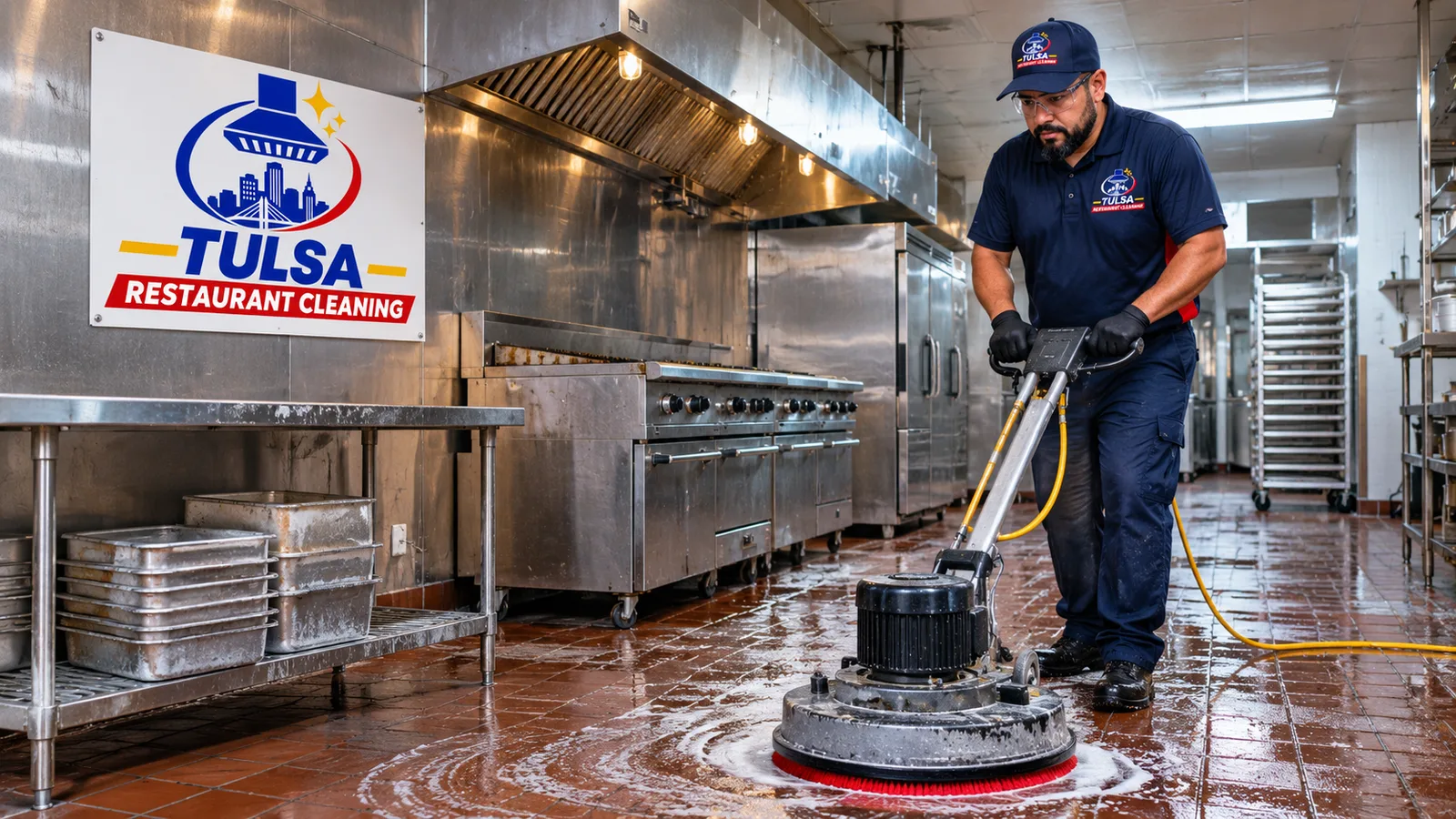
Commercial Kitchen Floor Cleaning removes the grease film, tracked-in soil and food residue that routine mopping can leave behind. Grease collects around fryers, cooking lines, prep stations, sinks and floor drains. Once spread by mop water or foot traffic, it can leave a dull, slippery film across tile and other hard surfaces.
Tulsa Restaurant Cleaning provides floor cleaning services for independent restaurants, bars, cafés, institutional kitchens and other food-service operations. For every project, a professional restaurant company in Tulsa, OK plans the work around the floor material, soil load, access and operating schedule. The goal is a practical cleaning plan that reaches edges, grout lines and equipment perimeters without disrupting service more than necessary.
Our address near East Fifth Court gives us direct access to restaurant districts across central Tulsa. In the Blue Dome District, late operating hours can make after-close scheduling the sensible choice. The Pearl District has a mix of food businesses in commercial spaces with different floor materials and layouts, so the method must match the surface rather than rely on one chemical or machine. Brookside and Cherry Street restaurants often manage steady dining traffic, making entry paths and transitions between dining and kitchen areas important parts of the scope.
Restaurant Floor Degreasing That Goes Beyond Mopping
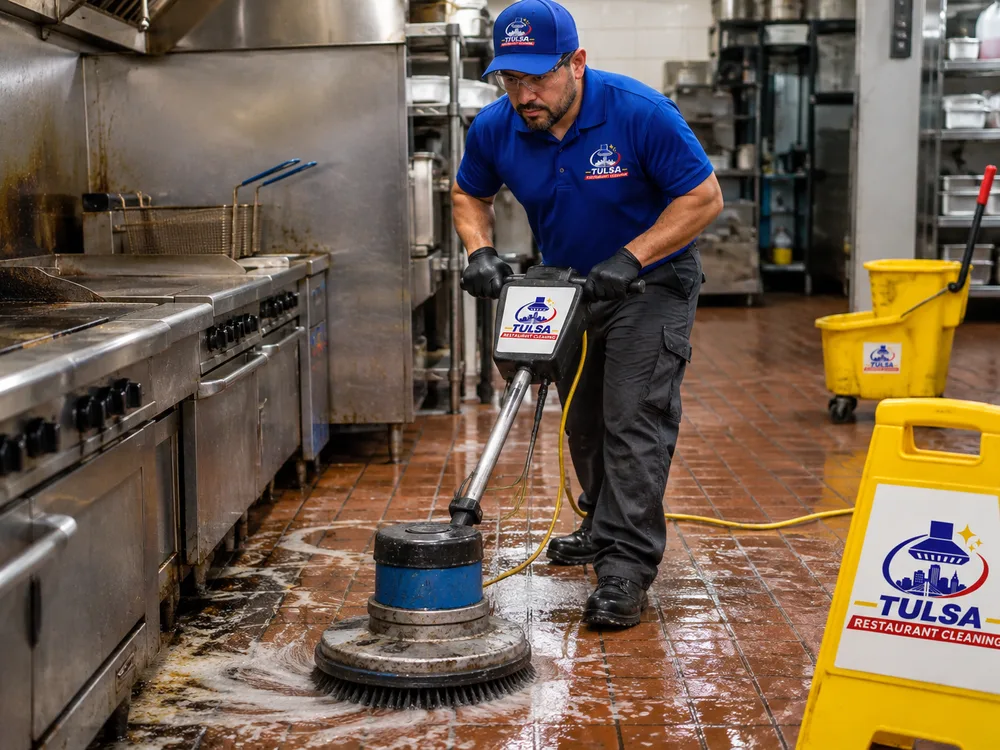
A mop is useful for daily upkeep, but it can redistribute oily residue when the solution becomes loaded with soil. Professional kitchen floor degreasing uses controlled chemical dwell time, mechanical agitation and recovery of the dirty solution. The degreaser must be suitable for the flooring, mixed according to its label and allowed enough contact time to loosen bonded soil before agitation.
Depending on the surface and layout, agitation may involve a low-speed rotary machine, an automatic scrubber, deck brushes or detailed hand work around fixed equipment and floor drains. The suspended soil is then extracted or wet-vacuumed rather than left to dry on the floor. A clean-water rinse helps remove remaining chemical and soil residue. Wet-floor controls stay in place until the work area is ready for foot traffic.
We pay particular attention to fryer approaches, cook-line aisles, dishwashing zones and transitions where greasy kitchen soil gets tracked into other areas. Equipment movement is discussed before work begins because utility connections, weight and safe access can limit what should be moved.
Floor care by surface and area
Restaurant Tile Cleaning, Grout Cleaning and Hard-Surface Care
Tile and Quarry Tile
Porcelain, ceramic and quarry tile can tolerate different products and levels of agitation. We identify the surface, test the method where appropriate and clean without treating every tiled floor as identical.
Grout Lines
Restaurant grout cleaning targets embedded soil in recessed joints, edges and corners. Dark grout is not always dirty grout, so the scope separates removable buildup from permanent staining, wear or failed joints.
Textured Floors
Slip-resistant textures can trap grease in low points that a flat mop misses. Proper brushes, dwell time and solution recovery help clean those profiles without leaving a detergent film.
Resilient Hard Flooring
Sheet vinyl and other resilient commercial floors require compatible chemistry and controlled agitation. Excess alkalinity, aggressive pads or standing solution may damage some materials.
Edges and Equipment Perimeters
Hand detailing addresses base transitions, legs, casters and accessible spaces around fixed equipment. These areas often collect residue outside the main path of an automatic scrubber.
Dining and Service Areas
When included in the agreed scope, commercial floor cleaning can cover hard-surface paths outside the kitchen where cooking residue and outdoor soil meet.
How service works
How Our Commercial Kitchen Floor Cleaning Process Works
-
Step 01
Inspect the Floor and Soil
We review the flooring type, grout condition, grease concentration, drainage, equipment access and areas that must remain available. Existing damage, loose grout or sensitive surfaces are identified before cleaning.
-
Step 02
Set the Scope and Schedule
The written scope defines the areas included, access requirements and a suitable service window. After-close, before-open or other low-traffic scheduling may be used when the operation permits.
-
Step 03
Prepare the Work Area
Loose debris is removed, movable items are relocated as agreed, and nearby surfaces are protected when needed. Safety signs and wet-work controls separate the cleaning zone from staff traffic.
-
Step 04
Apply and Agitate Degreaser
Surface-compatible chemistry is applied at the proper dilution. After an appropriate dwell period, the floor and accessible grout lines are mechanically scrubbed, with detail work at edges and tight areas.
-
Step 05
Recover, Rinse and Review
The dirty solution is recovered, and the floor is rinsed as the method requires. We inspect the cleaned area for remaining residue and discuss any staining, damaged grout or maintenance concerns that cleaning cannot correct.
A Cleaning Plan Built Around Restaurant Operations
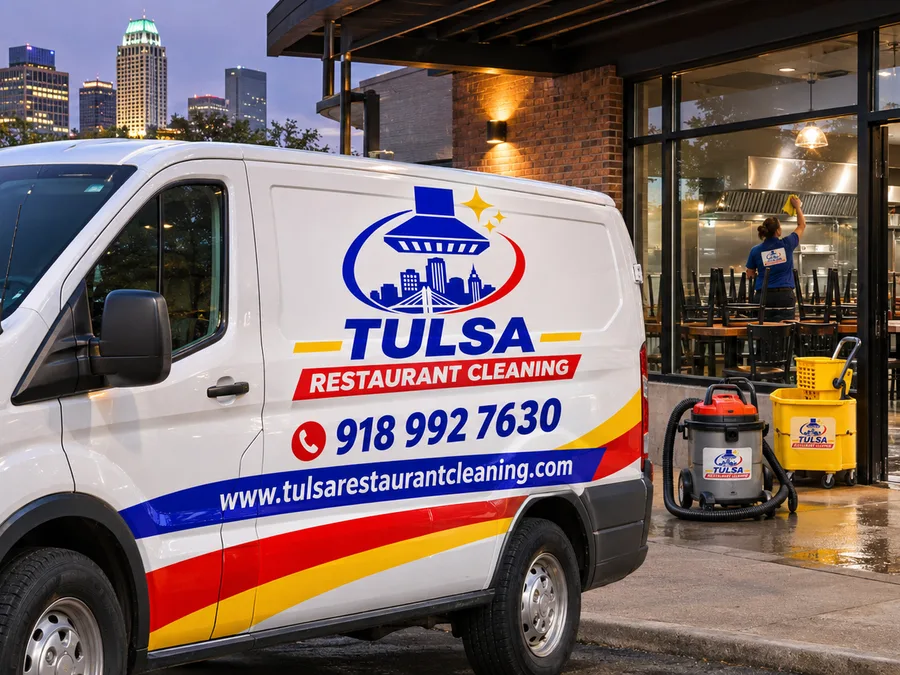
A kitchen cannot be treated like an empty warehouse. Food-contact items must be protected, staff routes need to be controlled, and cleaned floors need time to dry before normal activity resumes. We coordinate access so the work does not conflict with active cooking, deliveries or closing duties.
Tulsa weather also affects floor care. Spring thunderstorms and winter precipitation can bring water and grit through entrances, while hot periods increase the demands placed on busy cooking lines. Entry soil eventually reaches service and kitchen paths, where it can combine with oily residue. Mats, prompt spill response and frequent solution changes during daily mopping help limit that transfer between professional cleanings.
Cleaning supports sanitation and housekeeping, but it does not repair cracked tile, failed grout, damaged coving or drainage problems. It also does not replace the restaurant's own food-safety procedures or pest-control program. We report visible conditions that may need repair so managers can separate a cleanable soil problem from a flooring defect.
Choosing a Restaurant Floor Cleaning Schedule
The right frequency depends on cooking volume, menu, floor texture, staffing routines and how quickly residue returns. Fry-heavy operations may need kitchen floor degreasing more often than a low-grease prep environment. A floor with deep grout joints or an aggressive slip-resistant texture may also hold soil faster than a smooth, well-maintained surface.
Watch for a tacky feel after drying, persistent odor near grout or drains, dark buildup at edges, visible mop trails and a greasy film that returns soon after routine cleaning. These conditions can indicate overloaded mop water, insufficient dwell time, incomplete rinsing or soil that needs mechanical agitation and extraction.
Between visits, remove loose debris before mopping, follow the cleaner label, change solution when it becomes dirty and keep separate tools for greasy kitchen zones when practical. Clean spills promptly and maintain entrance mats so grit is captured before it moves deeper into the operation. A recurring plan can then focus on bonded soil and detailed areas rather than replacing daily housekeeping.
Tell Tulsa Restaurant Cleaning about your floor material, kitchen layout, problem areas and preferred service window. We will define a practical scope before work is scheduled.
Common questions
Commercial Floor Cleaning Questions from Tulsa Restaurants
How much does commercial kitchen floor cleaning cost in Tulsa? +
Pricing depends on square footage, soil level, floor material, grout condition, equipment access and the service window. A lightly soiled open floor takes less labor than a compact cook line with heavy grease, textured tile and extensive hand detailing. After inspecting the space, Tulsa Restaurant Cleaning can provide a written scope based on the areas and work actually required.
Can restaurant floor cleaning be scheduled after closing? +
Yes, after-close scheduling may be available when access, staffing and drying time allow it. Restaurants in late-night districts such as Blue Dome may need a different service window than a breakfast or lunch operation. The schedule is confirmed in advance so cleaning does not overlap with active food preparation or employee closing tasks.
Will kitchen floor degreasing remove all dark grout staining? +
Degreasing can remove oily soil from sound grout, but it cannot guarantee removal of permanent discoloration, absorbed staining or damage. Unsealed cementitious grout is porous, while epoxy grout responds differently to chemicals and agitation. We assess the joint condition and explain when a dark line appears to be soil, wear or failed grout.
Can you clean around fryers and fixed kitchen equipment? +
Yes, accessible floor around fryers and fixed equipment can be detailed without moving equipment that is unsafe to disconnect or relocate. Heavy appliances, gas connections, electrical connections and fixed plumbing affect access. Any equipment movement must be agreed upon before service, and inaccessible flooring is documented in the scope.
How long does restaurant floor cleaning take? +
Many jobs can be completed within a planned low-traffic service window, but the actual duration depends on floor area, grease buildup, obstacles and drying conditions. A compact kitchen with dense equipment may require more detail time per square foot than an open floor. The expected work and drying window are discussed after inspection.
What floor types can be professionally cleaned? +
Many commercial hard floors can be cleaned, including ceramic tile, porcelain tile, quarry tile and compatible resilient flooring. The product, pad or brush must match the material. Natural stone, damaged coatings and unknown floors may require testing or a modified method before full cleaning begins.
How should we prepare for restaurant floor cleaning in Tulsa? +
Remove loose items and food products from the agreed work zone, complete active cooking, and provide clear access at the scheduled time. Staff should identify sensitive equipment, damaged flooring and areas that cannot get wet. For central Tulsa locations with limited loading access, equipment entry and parking arrangements should also be discussed in advance.
Plan a Cleaner Commercial Kitchen Floor
Share your floor type, approximate area, grease concerns and operating schedule with Tulsa Restaurant Cleaning. We will help define the right cleaning method and a workable service window.