Restaurant cleaning in Tulsa, Oklahoma
Restaurant Cleaning Services in Tulsa
Detailed cleaning for dining rooms, bars, restrooms, floors, back rooms, and overhead surfaces, scheduled around your operating hours.
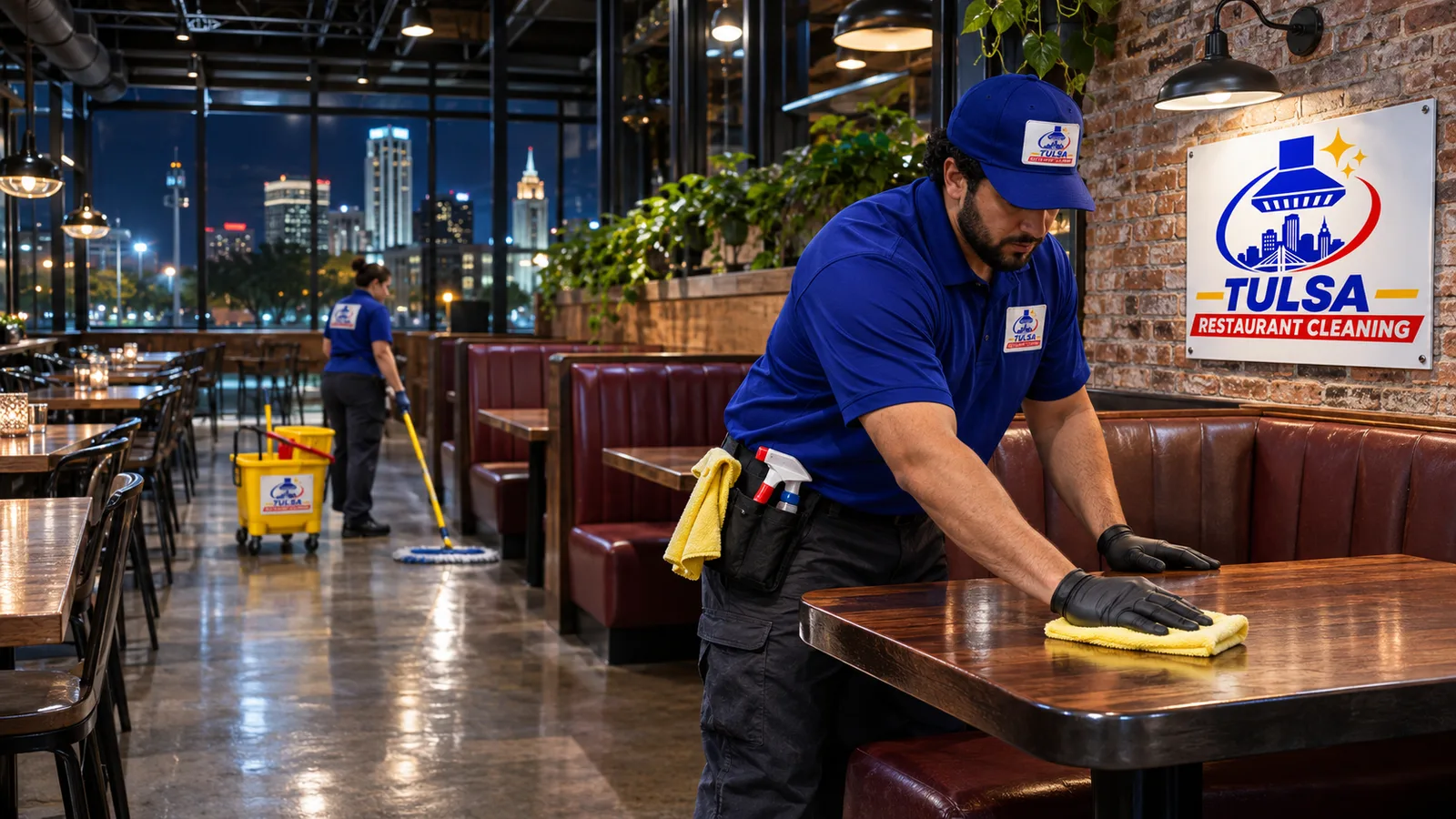
Reliable Restaurant Cleaning Services Built Around Your Schedule
Restaurant Cleaning Services should address the surfaces guests notice, the areas employees use throughout a shift, and the buildup that ordinary closing duties miss. Tulsa Restaurant Cleaning develops a written scope based on your layout, traffic, service style, floor materials, and hours. The plan can cover recurring front of house cleaning, scheduled deep cleaning, and detailed attention to high or hard-to-reach surfaces.
Our work is planned to avoid interfering with opening preparation, meal service, and closing routines. We are Tulsa's restaurant specialists, coordinating access, cleaning order, and priority areas with the person responsible for the facility. That preparation matters in busy commercial districts such as Downtown Tulsa and the Blue Dome District, where evening service and event traffic may leave a narrow overnight cleaning window. Restaurants around Cherry Street and Brookside can also experience concentrated foot traffic, making entryways and dining floors recurring priorities.
A clear scope keeps responsibilities easy to verify. We identify which rooms, fixtures, floor types, and detail tasks are included, then establish a practical service frequency. Your managers know what the cleaning crew will handle and which duties remain with restaurant staff.
Cleaning Coverage for Guest and Staff Areas
Dining Area Cleaning
Restaurant dining room cleaning can include tables, chairs, booth seats, partitions, ledges, baseboards, window sills, and other touchpoints. Crews work around movable furniture and pay attention to crumbs, dust, smears, and soil along edges.
Front Of House Cleaning
Restaurant front of house cleaning in Tulsa may cover entrances, host stations, waiting areas, service stations, interior glass, doors, and visible fixtures. The scope is adjusted for your guest flow and closing routine.
Restaurant Bar Cleaning
Bar cleaning focuses on guest-facing counters, stools, rails, footrests, exterior cabinet surfaces, sinks when included in scope, and flooring around the bar. Cleaning products are matched to sealed wood, stainless steel, glass, tile, or other finishes.
Restroom Cleaning
Restaurant restroom cleaning in Tulsa can include toilets, urinals, partitions, sinks, mirrors, dispensers, doors, touchpoints, and floors. Soap, paper goods, and liners can be checked when stocking duties are part of the agreement.
Back Room Cleaning
Restaurant back of house cleaning in Tulsa may include storage rooms, staff areas, corridors, office spaces, and non-food-contact exterior surfaces. Food-preparation equipment and specialized exhaust systems require a separately defined scope.
High Dusting
High dusting targets vents, pipes, beams, light housings, ledges, signs, and other elevated surfaces that collect settled dust. Access requirements and nearby equipment are reviewed before this work is scheduled.
Restaurant Floor Cleaning Matched to the Surface
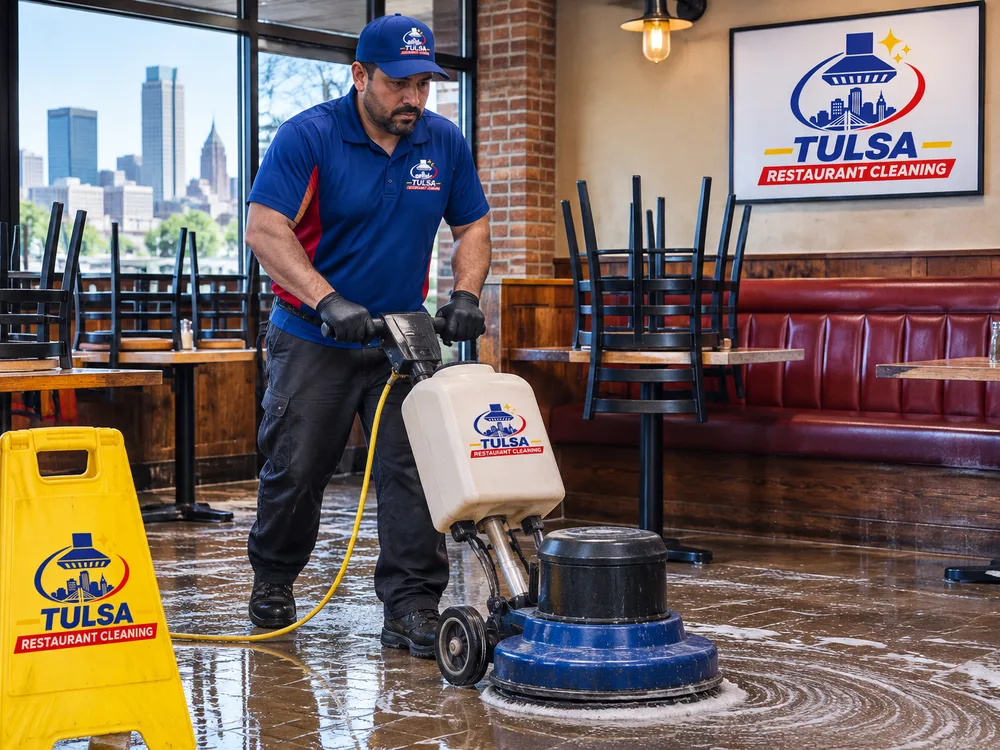
Restaurant floors collect tracked-in grit, food residue, drink spills, and soil pushed under booths or along wall edges. A useful floor plan starts by identifying the material and finish. Ceramic or porcelain tile, luxury vinyl tile, sealed concrete, quarry tile, and wood-look commercial flooring do not all respond to the same chemical, pad, or amount of moisture.
Routine service can include vacuuming or sweeping, damp mopping, spot treatment, and edge cleaning. Periodic work may involve machine scrubbing or finish care when compatible with the floor. Grouted surfaces often need particular attention around corners, table bases, restroom fixtures, and transitions where soil remains after a quick mop.
Tulsa's thunderstorms can bring wet footprints and grit through entrances, while dry, windy periods can increase dust near doors and windows. Entry mats, thresholds, and traffic lanes should therefore be inspected during each visit rather than treated as identical every night. Slip risks also require prompt attention, so cleaners should use the correct dilution, avoid leaving excess residue, and place wet-floor signs while floors dry.
High Dusting for Overhead Surfaces
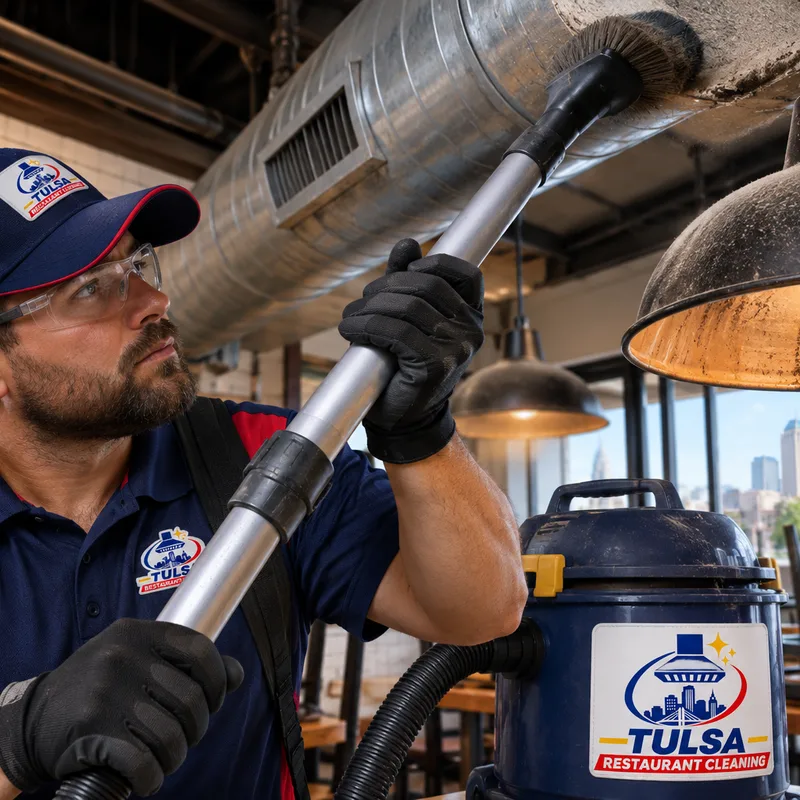
Dust does not remain at eye level. It settles on exposed ductwork, ceiling vents, beams, pendant light housings, wall ledges, artwork frames, and the tops of partitions. Air movement can later redistribute that buildup, which is why high dusting belongs in a planned rotation rather than being left until it is clearly visible.
Before work begins, the crew identifies access limitations, fragile fixtures, food-contact surfaces, and occupied areas beneath the work zone. Extension tools, microfiber dusting equipment, or commercial vacuums with suitable attachments may be used depending on the surface. Ladders must be positioned on stable flooring without blocking emergency routes. Sensitive areas may require covering or moving nearby items before overhead work starts.
High dusting frequency depends on ceiling height, HVAC airflow, cooking activity, exposed structural elements, and how quickly dust returns. A low ledge near a busy dining area may need more frequent attention than a high beam in a closed storage room. Scheduling this work before lower surfaces and floors are cleaned allows fallen dust to be removed during the same visit.
How service works
How We Build a Restaurant Cleaning Plan
-
Step01
Walk Through the Restaurant
We review dining areas, entrances, bars, restrooms, corridors, storage areas, floor types, elevated surfaces, and access points. We also note fixed seating, delicate finishes, security procedures, and the time available between closing and opening.
-
Step02
Define the Scope and Frequency
The written scope assigns recurring duties and periodic detail work. High-traffic floors and restrooms may need attention every service visit, while baseboards, vents, and high ledges can follow a rotation suited to actual buildup.
-
Step03
Set Access and Safety Procedures
Managers confirm entry instructions, alarm procedures, restricted rooms, product storage, and closing contacts. The cleaning order accounts for wet floors, occupied work areas, and safe ladder placement.
-
Step04
Clean and Check the Work
Crews follow the agreed task list and work from higher surfaces toward lower surfaces and floors. A final review can check priority areas, secured doors, supplies, lights, and any condition that should be reported.
-
Step05
Adjust as Operations Change
Seasonal traffic, private events, menu changes, remodels, and revised operating hours can affect cleaning needs. The scope can be updated when a room, finish, or service schedule changes.
A Practical Standard for Front and Back Areas
A restaurant cleaning plan should be specific enough to inspect. Broad terms such as “clean dining room” can lead to missed edges, dusty ledges, or uncertainty about who handles the host stand and service stations. A better task list identifies surfaces, methods, frequency, and exclusions. It can distinguish nightly floor care from periodic machine work, for example, or routine dusting from ladder-access high dusting.
Front of house work is usually sequenced around guest-facing priorities: entry glass, host areas, dining furniture, visible fixtures, restrooms, and floors. Back room tasks require equal clarity because storage arrangements, staff traffic, and restricted zones differ by restaurant. Cleaning crews should never move chemicals, food, or equipment without an agreed procedure.
Food-contact surfaces and equipment must be handled according to the restaurant's sanitation procedures and product directions. Cleaning removes soil; sanitizing uses an appropriate product at its labeled concentration and contact time. Those are separate steps. Tulsa restaurants are regulated locally by the Tulsa Health Department, but hiring a cleaning company does not transfer the operator's responsibility for food safety, employee practices, pest control, or regulatory compliance.
Get a cleaning scope based on your rooms, floor materials, operating hours, and recurring trouble spots before service begins.
Common questions
Questions About Restaurant Cleaning in Tulsa
How much do Restaurant Cleaning Services cost in Tulsa?+
Restaurant cleaning is usually priced after a walkthrough because square footage alone does not show the full workload. The quote may account for service frequency, number of restrooms, floor materials, fixed seating, bar areas, soil level, high dusting access, supply responsibilities, and the time available after closing. A written proposal should identify recurring duties, periodic tasks, exclusions, and any separately priced deep cleaning.
Can cleaning be completed after the restaurant closes?+
Yes, restaurant cleaning can usually be scheduled after closing or during another low-activity period. The workable window depends on staff departure, alarm procedures, opening preparation, and how long floors need to dry. Restaurants near Downtown Tulsa entertainment venues may have later closing times or event-driven traffic, so access and completion deadlines should be established before recurring service starts.
How often should restaurant high dusting be scheduled?+
High dusting should follow a rotation based on visible accumulation, ceiling layout, airflow, and cooking activity. Exposed ductwork, vents, beams, and light housings may collect dust at different rates. During the initial walkthrough, accessible overhead surfaces can be grouped by priority so detailed work fits within the service schedule without disrupting dining operations.
What is included in Restaurant Front Of House Cleaning in Tulsa?+
Front of house cleaning commonly includes entrances, host stations, waiting areas, dining furniture, ledges, interior glass, service stations, restrooms, and floors when those items appear in the written scope. Bars, private dining rooms, patios, upholstery, and machine floor care should be identified separately because layouts and finish requirements vary.
Do you clean restaurant back of house areas?+
Back of house cleaning can include corridors, storage rooms, staff areas, offices, and approved non-food-contact surfaces. The exact boundaries should be agreed upon during the walkthrough. Food-preparation equipment, cooking lines, grease exhaust systems, and regulated sanitation duties require specific procedures and may fall outside a standard janitorial scope.
Can the same method be used on every restaurant floor?+
No, floor cleaning methods must match the material, finish, and soil. Quarry tile, ceramic tile, sealed concrete, luxury vinyl tile, and finished wood surfaces can require different cleaners, pads, moisture levels, and machine settings. Testing an inconspicuous area and following manufacturer directions helps prevent discoloration, residue, or finish damage.
Who supplies liners, paper products, soap, and cleaning chemicals?+
Supply responsibility is set in the service agreement. The restaurant may provide consumables, or replenishment may be included if inventory and approved products are specified. Restroom dispensers, trash liners, chemical storage locations, Safety Data Sheets, and reorder procedures should be confirmed before the first scheduled visit.
Ready for a Cleaner Restaurant?
Tell Tulsa Restaurant Cleaning about your layout, operating schedule, floor types, and priority areas. We will help define a practical scope for recurring cleaning or detailed service.