Restaurant cleaning services in Tulsa, Oklahoma
Restaurant Cleaning Company
Detailed cleaning for commercial kitchens, dining areas, walk-in coolers, storage spaces, and hard-to-reach surfaces, scheduled around your operating hours.
Restaurant Deep Cleaning in Tulsa
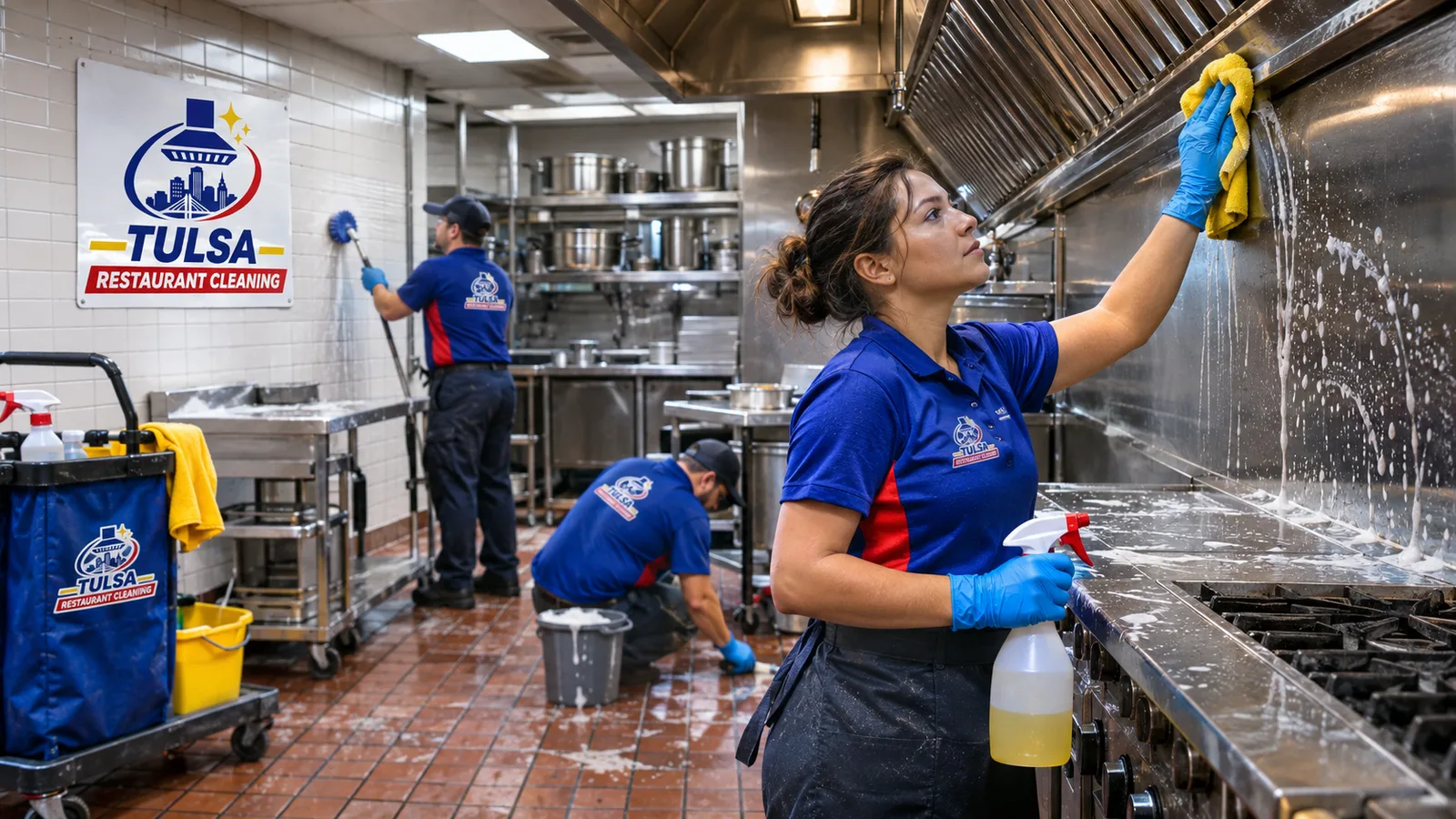
A dependable Restaurant Cleaning Company should understand that food-service cleaning is different from ordinary office janitorial work. Grease migrates onto equipment sides, walls, floors, casters, pipes, and overhead surfaces. Crumbs and residue collect beneath cooking lines and around fixed fixtures. Dining rooms need careful attention to edges, chair bases, booths, partitions, and other high-contact areas.
Tulsa Restaurant Cleaning provides detailed cleaning based on the condition, layout, and operating schedule of each facility. Our restaurant specialists serving Tulsa, OK plan the work around access restrictions, food storage, equipment placement, and the time available before the next shift. The goal is a clear written scope that identifies what will be cleaned, what preparation is required, and which areas need special handling.
Tulsa's restaurant mix creates varied cleaning demands. Downtown kitchens may have compact layouts and limited staging space. The Blue Dome District has late-night operations that can require work during narrow off-hours. Brookside and Cherry Street dining rooms often depend on careful presentation in customer-facing areas. In the Tulsa Arts District, event traffic can also affect when detailed cleaning is practical. These conditions shape scheduling and crew access rather than changing the standard of work.
Detailed restaurant care
Restaurant Deep Cleaning Services
Kitchen Deep Cleaning
Degreasing and detailed cleaning for floors, walls, baseboards, equipment exteriors, prep-area surfaces, sinks, legs, casters, and accessible spaces beneath or behind movable equipment.
Walk-In Cooler Cleaning
Cleaning for accessible shelving, walls, floors, doors, handles, gaskets, and corners after food has been protected or removed according to the agreed preparation plan.
High Dusting
Removal of accumulated dust and debris from accessible ceiling vents, pipes, ledges, light housings, beams, and other elevated surfaces using appropriate extension tools and access equipment.
Dining and Service Areas
Detailed cleaning around booths, tables, chair legs, partitions, service stations, baseboards, counters, and floor edges where routine nightly work may leave buildup.
Storage and Back-of-House Areas
Cleaning around accessible racks, dry-storage floors, utility areas, employee spaces, and transition points that collect tracked soil, packaging debris, and residue.
Targeted Reset Cleaning
A defined deep clean before reopening, after equipment rearrangement, during a management transition, or when a neglected area needs to be brought back into the routine.
Commercial Kitchen Deep Cleaning Tulsa Restaurants Can Schedule Around Operations
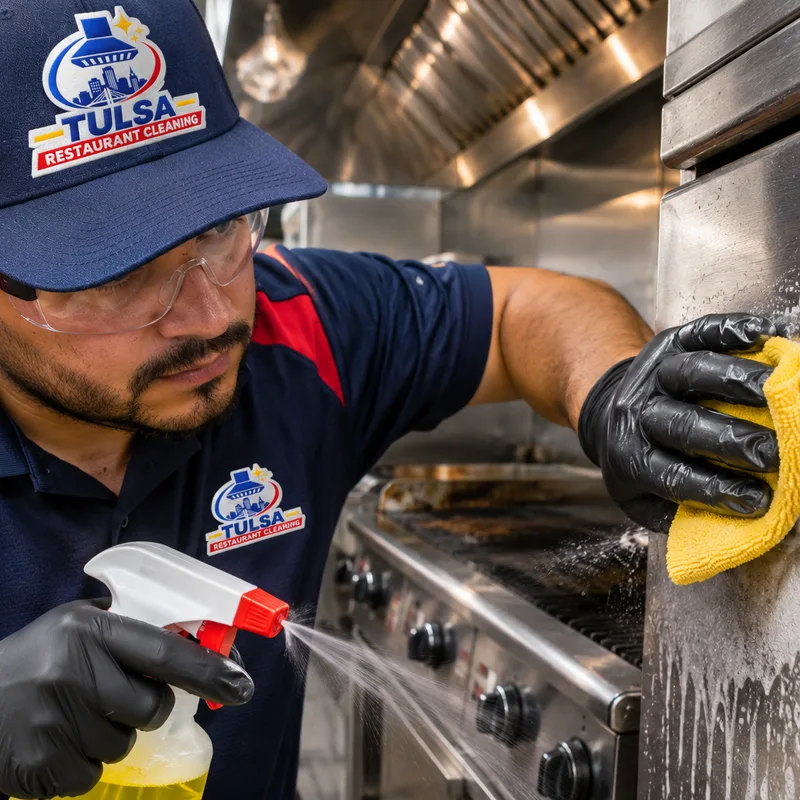
Professional restaurant deep cleaning starts with a scope, not a generic checklist. We identify the cooking line, prep zones, warewashing area, walk-ins, dry storage, dining room, service stations, restrooms, and elevated surfaces included in the job. We also note which appliances can be moved safely, which surfaces require manufacturer-compatible chemistry, and where access must remain restricted.
Cleaning methods depend on the soil and substrate. Alkaline degreasers are commonly used on compatible grease-laden surfaces, while neutral cleaners are better suited to materials that strong chemistry could damage. Dwell time helps loosen buildup before agitation and recovery. Color-coded microfiber, dedicated tools, scraper controls, and clean-to-dirty work patterns help prevent soil from being spread back across finished areas.
Cleaning and sanitizing are separate steps. Soil must first be removed from a food-contact surface before an approved sanitizer can work as directed. Product labels establish dilution, contact time, rinsing requirements, and surface compatibility. Our scope distinguishes general deep cleaning from specialized services such as exhaust-system cleaning, pest control, equipment repair, or hazardous-material remediation.
How service works
How Our Restaurant Deep Cleaners Plan the Work
-
Step01
Review the Facility
We discuss the problem areas, operating hours, access, floor and wall materials, equipment layout, cooler contents, and any surfaces that require restricted products or special care.
-
Step02
Define the Written Scope
The plan identifies included rooms, fixtures, equipment exteriors, elevated surfaces, exclusions, preparation duties, and the expected service window. This keeps a kitchen deep cleaning focused on agreed priorities.
-
Step03
Prepare and Protect
Food, utensils, smallwares, and exposed packaging must be removed, covered, or secured as appropriate. The crew stages tools and chemistry to reduce cross-contamination and protect adjacent finishes.
-
Step04
Clean in a Controlled Order
Work generally moves from high surfaces to low surfaces and from cleaner zones toward heavier soil. Loosened debris is collected before floors receive their final cleaning.
-
Step05
Inspect the Included Areas
The completed scope is reviewed for remaining residue, missed edges, and accessible buildup. Any area that could not be reached or completed under the agreed conditions is documented.
Walk-In Cooler Cleaning Requires Careful Preparation
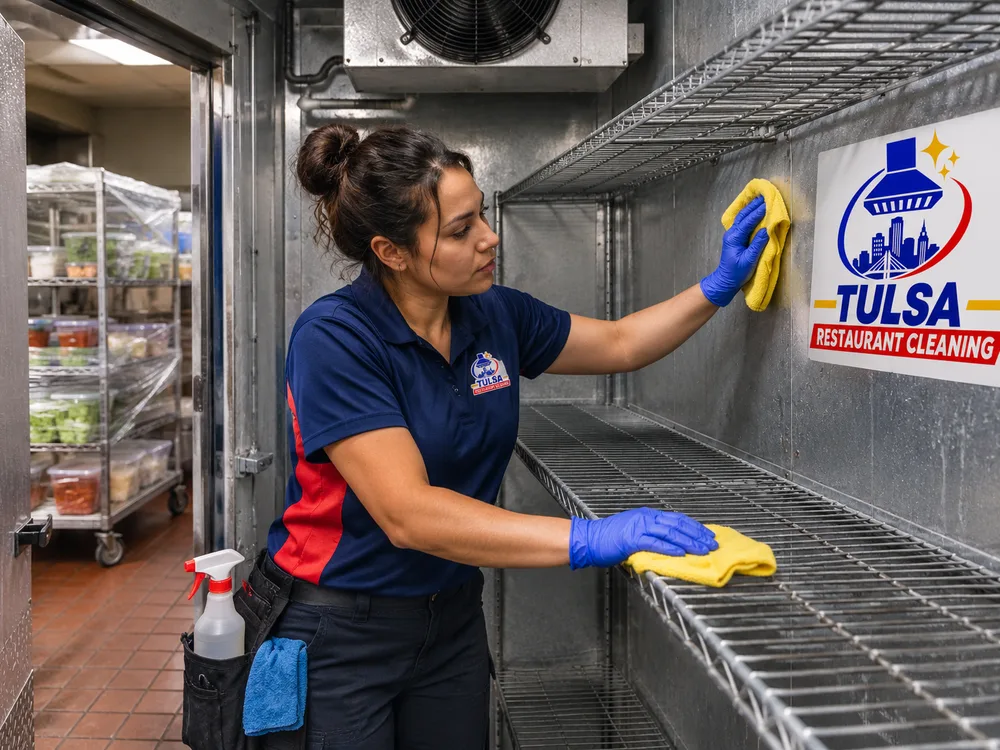
Walk-in cooler cleaning needs a plan for food protection and temperature control. Inventory should be moved or securely protected before shelves, walls, doors, gaskets, and floors are addressed. Staff should decide where products can be held and how long the unit can remain accessible without disrupting safe storage practices.
A proper scope separates removable shelving from fixed components and identifies condensate, ice, leaks, damaged gaskets, or mechanical issues that cleaning will not correct. Cleaners should avoid spraying electrical components, fan assemblies, controls, or exposed product. Chemistry must also be compatible with metal, sealed flooring, wall panels, and gasket materials.
Visible mold-like growth, persistent odors, recurring standing water, or heavy ice may indicate a moisture or equipment problem. Cleaning can remove accessible residue, but refrigeration repair or qualified remediation may be needed when the underlying cause falls outside routine cleaning.
Overhead cleaning
High Dusting Tulsa Food-Service Facilities Need
High dusting addresses buildup on vents, exposed pipes, conduits, ledges, light housings, beams, and other accessible overhead surfaces. Dust at height can become greasy near cooking areas, so dry dusting alone may not remove it. The method should match the surface and control falling debris before lower areas receive their final cleaning.
Tulsa's hot summers place sustained demand on air-conditioning systems, while spring weather can bring windblown dust and pollen to entryways and air-handling paths. These conditions can contribute to visible accumulation, especially around returns, grilles, and seldom-touched ledges. High work should be scheduled when exposed food and clean utensils can be removed or covered.
Access matters. Extension tools may be sufficient for some surfaces, while taller or obstructed areas can require ladders or other approved access equipment. Exhaust hoods, ducts, fans, and rooftop exhaust components require specialized inspection and cleaning methods; ordinary high dusting is not a substitute for qualified commercial kitchen exhaust-system service.
How Much Does Restaurant Deep Cleaning Cost in Tulsa?
Restaurant deep cleaning in Tulsa typically ranges from about $500 to $2,500, while large kitchens, heavy grease buildup, extensive high dusting, or multi-area projects may cost more. A smaller targeted cleaning may fall below that range.
Final pricing depends on square footage, soil level, included equipment, ceiling height, walk-in cooler preparation, access, staffing needs, and the available work window. Moving heavy appliances or correcting neglected buildup also adds labor. These are general, non-binding ranges; the exact cost is confirmed after the facility and requested scope are reviewed.
Get a written cleaning scope built around your kitchen layout, priority areas, access limits, and operating schedule before work begins.
Common questions
Restaurant Cleaning Questions
How long does restaurant deep cleaning take?+
A targeted area may take several hours, while a full kitchen, cooler, dining area, and high-dusting scope can require a longer overnight window or work across multiple visits. Tulsa restaurants with compact cooking lines or limited equipment staging may need extra time for safe access. The schedule is set after reviewing square footage, buildup, crew access, and the time between closing and the next shift.
Can cleaning be scheduled after the restaurant closes?+
Yes, professional restaurant deep cleaning can often be scheduled during off-hours when the facility can provide access and enough time for the agreed work. Late-night operations in areas such as the Blue Dome District may require a different start time than restaurants that close earlier. The service window should also allow surfaces and floors to be ready before employees return.
What should our staff do before kitchen deep cleaning?+
Staff should remove or secure food, utensils, smallwares, paper goods, and personal items from the work areas. They should also identify sensitive equipment, provide access instructions, and move lightweight items when requested. Heavy appliances should only be moved when the plan addresses utilities, weight, floor protection, and safe clearance.
Do you clean behind commercial kitchen equipment?+
Accessible spaces behind and beneath movable equipment can be included when the equipment can be relocated safely. Gas lines, hard plumbing, electrical connections, weight, and fixed installation may prevent movement by a cleaning crew. Those limits should be identified during the scope review so the restaurant knows exactly which surfaces can be reached.
Does walk-in cooler cleaning include removing food?+
Food removal and safe temporary storage are usually the restaurant's responsibility unless a different arrangement is written into the scope. The restaurant controls its inventory, cold-holding procedures, labeling, and disposition decisions. Cleaning begins after products are removed or protected and the work area is ready.
Is deep cleaning the same as sanitizing food-contact surfaces?+
No. Cleaning removes grease, food residue, and other soil, while sanitizing is a separate step performed on a clean surface with an appropriate product. The product label controls concentration, contact time, application, and any rinse requirement. Restaurant management remains responsible for its food-safety procedures and compliance obligations.
Can high dusting include kitchen exhaust ducts and fans?+
No, routine high dusting should not be treated as commercial kitchen exhaust-system cleaning. Accessible pipes, ledges, vents, and light housings may fit a high-dusting scope, but grease ducts, hood plenums, exhaust fans, and rooftop components require specialized methods and qualified service. These items should be identified separately when reviewing the facility.
Can we book recurring restaurant detailed cleaning?+
Yes, recurring detailed cleaning can be arranged around the areas that accumulate soil faster than routine closing work can address. Frequency depends on cooking volume, menu, operating hours, equipment layout, and the condition standard the restaurant wants to maintain. Each visit should still have a defined scope so priority areas and access requirements remain clear.
Plan Your Restaurant Deep Cleaning
Tell Tulsa Restaurant Cleaning which areas need attention, when the facility is available, and what your routine crew cannot reasonably address. We will use those details to define the scope and practical next steps.