Restaurant high dusting in Owasso, Oklahoma
Restaurant High Dusting in Owasso
Remove overhead dust and greasy residue from hard-to-reach surfaces with a planned cleaning scope built around your kitchen, dining area, and operating schedule.
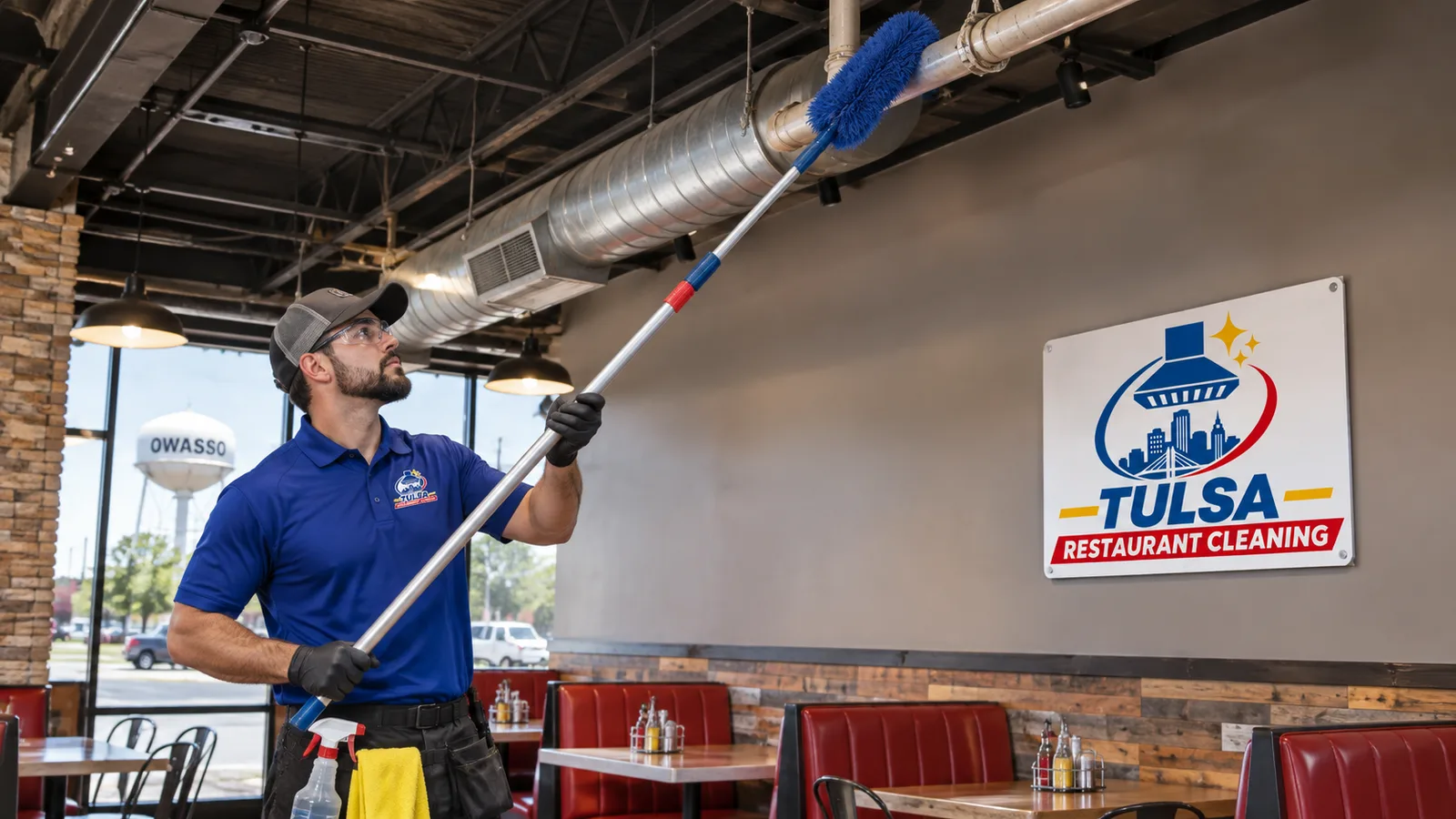
Overhead Cleaning for Working Restaurants
Restaurant High Dusting Owasso addresses the buildup that routine floor and counter cleaning cannot reach. Dust, lint, cobwebs, and aerosolized cooking residue collect on exposed ductwork, pipes, ceiling fans, light housings, beams, ledges, vents, and the tops of tall fixtures. Once disturbed by airflow or vibration, loose material can fall onto lower surfaces and make an otherwise clean restaurant look neglected.
Tulsa Restaurant Cleaning plans the work around the type of residue, ceiling height, access, and activity in each area. Dry dust may respond to HEPA-filtered vacuuming and microfiber tools. Greasy film often needs controlled wet wiping with a compatible degreaser. Food-contact surfaces, equipment, and open ingredients must be protected before overhead work starts.
We handle high dusting as controlled work inside an active commercial space, and Tulsa's local restaurant service defines what will be cleaned, which areas need special access, how nearby surfaces will be covered, and when the work should occur to limit disruption.
What Restaurant High Dusting in Owasso Can Cover
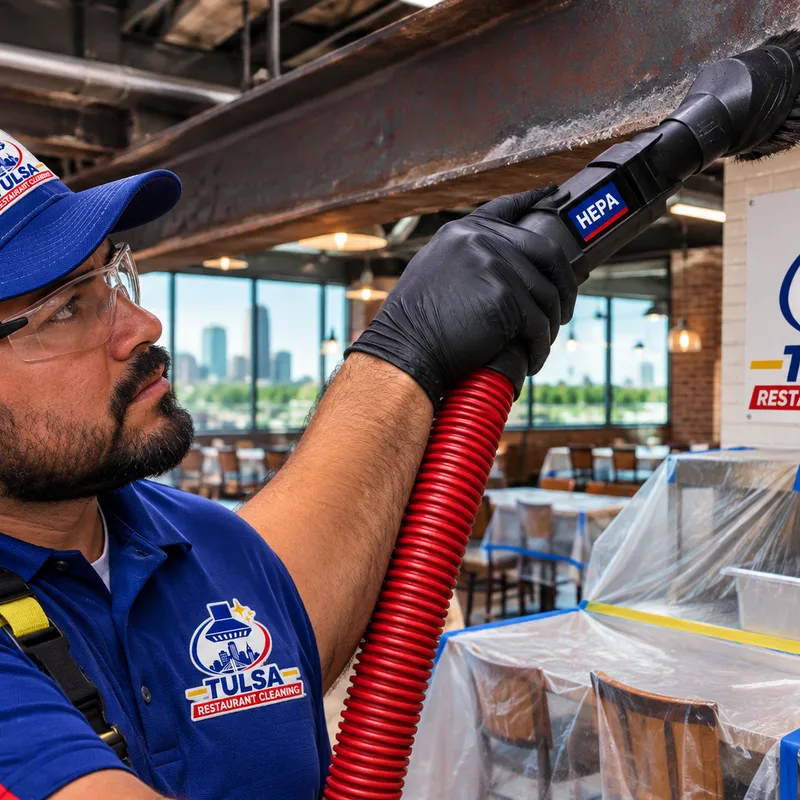
A useful high-dusting plan starts with an overhead survey. In front-of-house areas, the work may include exposed beams, pendant lights, ceiling fans, speaker housings, decorative ledges, return-air grilles, and the tops of partitions. Kitchens may require attention to accessible pipe runs, conduit, wall ledges, upper shelving exteriors, refrigeration tops, and non-food-contact equipment surfaces.
The method changes with the surface. A soft microfiber sleeve is suited to many painted ledges and fixtures. HEPA-filtered vacuuming captures loose dust at the tool rather than pushing it into the room. Damp wiping is used where dry methods cannot remove adhered residue. Delicate finishes, electrical components, fire-suppression equipment, and hot surfaces require extra care or exclusion from the scope.
High dusting does not include cleaning inside HVAC ducts, servicing fire-suppression systems, or cleaning internal hood and exhaust components unless those tasks are separately evaluated and assigned to qualified providers. Clear boundaries protect the restaurant and keep expectations practical.
High-dusting coverage
Areas That Commonly Need Overhead Attention
Dining Rooms and Bars
Pendant lights, exposed rafters, fans, décor ledges, speaker boxes, and beverage-area soffits can collect visible dust that affects the room's finished appearance.
Commercial Kitchens
Accessible pipes, conduit, upper wall ledges, refrigeration tops, and equipment exteriors may hold dust mixed with cooking residue. Cleaning methods must account for nearby food-contact surfaces.
Entry and Pickup Areas
High ledges, vents, light housings, and signage near frequently opened doors may gather airborne debris. These areas are highly visible to dine-in and carryout customers.
Storage and Utility Spaces
The tops of shelving, lockers, pipes, and door frames are easy to miss during routine cleaning. Access must be planned so stored goods remain protected.
Restrooms and Corridors
Exhaust grilles, partition tops, light fixtures, and wall ledges can show lint and dust. These smaller spaces may need careful ladder positioning.
Exposed-Ceiling Interiors
Open ceilings contain many horizontal surfaces, including ducts, beams, cable trays, and pipework. Their height and density usually make access the main scheduling factor.
How service works
How the High-Dusting Process Works
-
Step01
Inspect the Overhead Surfaces
We identify the surfaces, residue, ceiling height, access restrictions, fragile fixtures, and areas that should be excluded. The inspection also shows whether ladders, extension tools, or other access equipment may be needed.
-
Step02
Set the Scope and Schedule
The written scope records the rooms and overhead items to be cleaned. Work can be planned around closed hours, prep periods, deliveries, and other restaurant activity.
-
Step03
Protect the Work Area
Food and utensils are removed or secured, while equipment and food-contact surfaces are covered as appropriate. The immediate area is kept clear of restaurant staff and guests.
-
Step04
Remove Loose and Adhered Buildup
Technicians work from higher surfaces toward lower ones, using vacuum attachments, microfiber tools, or controlled damp wiping according to the residue and surface.
-
Step05
Clean Lower Surfaces and Review
Any debris released during the work is removed from the protected area. The completed scope is checked for missed ledges, remaining visible residue, and coverings that must be cleared before operations resume.
Restaurant Kitchen Cleaning in Owasso Requires Careful Coordination
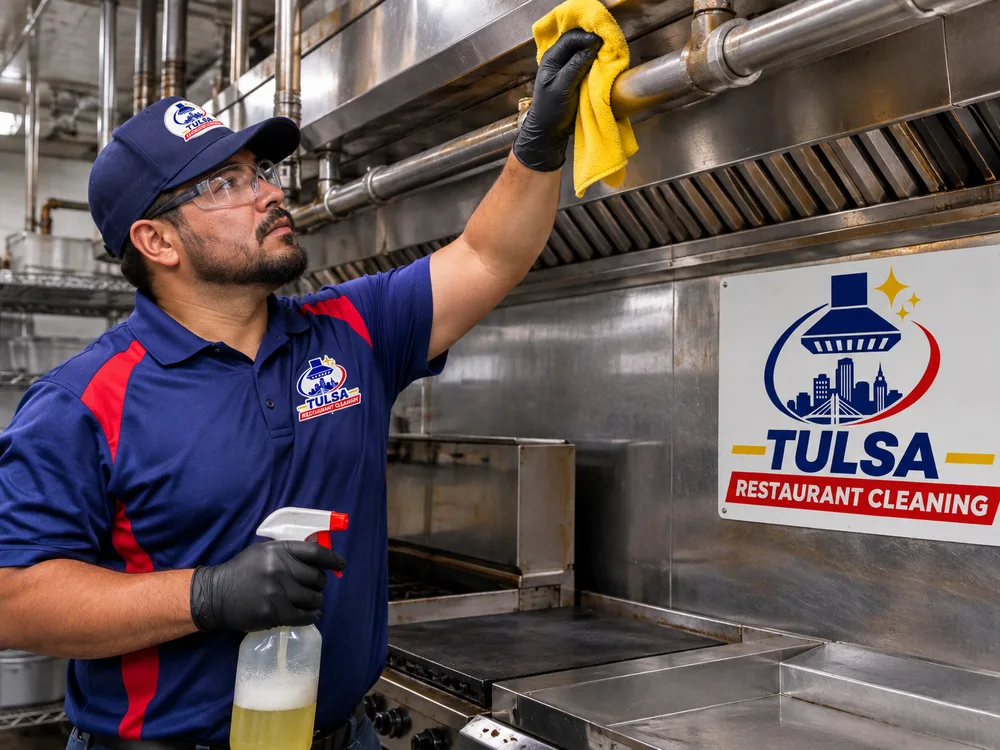
Overhead cleaning in a commercial kitchen should happen when open food is absent and food preparation has stopped in the affected zone. Covers alone are not a substitute for clearing exposed ingredients, utensils, and smallwares. After high dusting, lower surfaces within the work zone need appropriate follow-up cleaning before the area returns to use.
Grease changes the job. Loose dust can often be captured with a vacuum or microfiber tool, but oily residue binds particles to metal, painted surfaces, and equipment tops. Degreasing may require dwell time, repeated wiping, and careful control of moisture. The product must be compatible with the surface and used according to its label.
Owasso restaurants along the East Ninety-Sixth Street North commercial corridor often need cleaning timed around customer traffic and meal periods. Restaurants near Smith Farm Marketplace may also have delivery and pickup activity to work around. A planned start time, clear work zone, and agreed reopening sequence help prevent conflicts with staff, vendors, and guests.
How Often Should High Dusting Be Scheduled?
There is no single interval that fits every restaurant. Scheduling should be based on inspection findings, cooking volume, ceiling design, ventilation patterns, operating hours, and the speed at which visible buildup returns. Open ceilings and textured structures create more surfaces where dust can settle. Frying and other grease-producing cooking can make residue adhere faster near the kitchen and service line.
A practical program combines periodic overhead inspections with routine lower-level cleaning. Record the date, locations cleaned, access limitations, and areas where residue returned quickly. Those notes provide a better basis for future scheduling than a fixed calendar alone.
Oklahoma's windy spring weather and periods of high pollen can increase material tracked or drawn into frequently opened entrances. That does not mean every overhead surface needs immediate cleaning, but entry zones, pickup areas, and nearby vents may deserve closer inspection during those periods. Tulsa Restaurant Cleaning can build a repeat scope for stable areas while flagging surfaces that need more frequent attention.
Planning your scope
What Affects the Scope and Price?
Restaurant high dusting is normally priced after reviewing the site because access and residue can change the labor required. The main cost drivers are total overhead surface area, ceiling height, number of fixtures and obstructions, type of buildup, required access equipment, protection work, and the amount of lower-level cleanup afterward.
An open dining room with reachable beams and loose dust is different from a kitchen with dense pipework and adhered grease. Work completed outside operating hours may also involve scheduling considerations. If ceiling tiles are stained, sagging, or damaged, cleaning may not correct the condition and replacement may be the better choice. Electrical hazards, unstable fixtures, inaccessible voids, and surfaces near specialized systems may also be excluded.
A written scope should identify included rooms and surfaces, protection measures, access assumptions, expected working hours, and exclusions. The exact price is confirmed after the restaurant and overhead conditions have been assessed.
Get a clear overhead cleaning scope based on your restaurant's ceiling layout, residue, access needs, and operating schedule.
Common questions
Restaurant High Dusting Owasso FAQs
Can high dusting be completed while my Owasso restaurant is open?+
Some isolated front-of-house work may be possible during quiet periods, but kitchen high dusting should generally occur when food preparation has stopped in the affected zone. Guests and employees must remain clear of ladders and the work area, and exposed food, utensils, and food-contact surfaces need protection. Closed hours are often the practical choice for busy restaurants near Owasso's main retail corridors.
How long does restaurant high dusting take?+
The duration depends on ceiling height, surface area, access, and whether the buildup is loose dust or adhered grease. A small, accessible dining area may be completed in one scheduled visit, while a large exposed ceiling or several kitchen zones may need phased work. An inspection provides the most reliable schedule.
Will high dusting remove grease from overhead kitchen surfaces?+
Accessible grease film can often be reduced or removed with a surface-compatible degreaser and controlled wiping, but heavy deposits may need repeated treatment. Internal exhaust ducts, fan components, and fire-suppression equipment are specialized systems and are not assumed to be part of a standard high-dusting scope.
Do we need to move food and kitchen equipment first?+
Open food, utensils, and smallwares should be removed or securely stored before work begins. Fixed equipment may remain in place if it can be safely covered and does not block access. The preparation plan should identify what restaurant staff will clear and what the cleaning crew will protect.
Is Restaurant Kitchen Cleaning Owasso the same as high dusting?+
No. High dusting focuses on elevated, hard-to-reach surfaces, while broader restaurant kitchen cleaning may include floors, walls, equipment exteriors, and other accessible areas. The services can be coordinated so overhead work occurs first and lower surfaces are cleaned afterward.
How do I know whether a surface should be cleaned or replaced?+
Loose dust and removable residue are cleaning issues, while damaged, porous, corroded, or badly stained materials may need repair or replacement. Water-stained ceiling tiles should also be assessed for the source of moisture before cosmetic work. The pre-service inspection can separate cleanable buildup from material defects.
What should a high-dusting quote include?+
A useful quote should list the rooms, overhead surfaces, access method, protection work, scheduling assumptions, follow-up cleanup, and exclusions. For an Owasso restaurant, it should also account for meal periods, deliveries, pickup traffic, and the time needed to return each work zone to service.
Plan a Cleaner Overhead Space
Tell Tulsa Restaurant Cleaning about the rooms, ceiling height, visible buildup, and preferred service window. We will help define a practical scope for your Owasso restaurant.